

EMDR Therapy in Arizona
You Don't Have to Keep Reliving It
That memory you can't shake. The one that floods back when you least expect it, that hijacks your body and your breath. EMDR therapy helps your brain actually process it, so it stops running the show. And you don't have to talk through every painful detail out loud to get there.
At Liberation Counseling and Consulting, we offer EMDR therapy in person at our Tucson offices and online across Arizona for adults and teens. Our EMDR-trained therapist understands that healing from trauma takes more than just talking about it.
Schedule a Free Consultation
What Is EMDR Therapy?
EMDR stands for Eye Movement Desensitization and Reprocessing. It's a structured, evidence-based psychotherapy developed by Dr. Francine Shapiro in the late 1980s. Originally created to treat post-traumatic stress disorder (PTSD), EMDR is now recognized by the American Psychological Association (APA), the World Health Organization (WHO), and the U.S. Department of Veterans Affairs as an effective treatment for trauma and a growing range of mental health conditions.
Here's the core idea. When something painful happens and your brain doesn't fully process it at the time, that memory gets stored in your nervous system with all the original emotional charge still intact. So a sound, a smell, a situation that reminds you of what happened can send your body right back to that moment, as if it's happening all over again. That's not a flaw in you. That's your nervous system doing exactly what it was designed to do. It just needs help finishing the job.
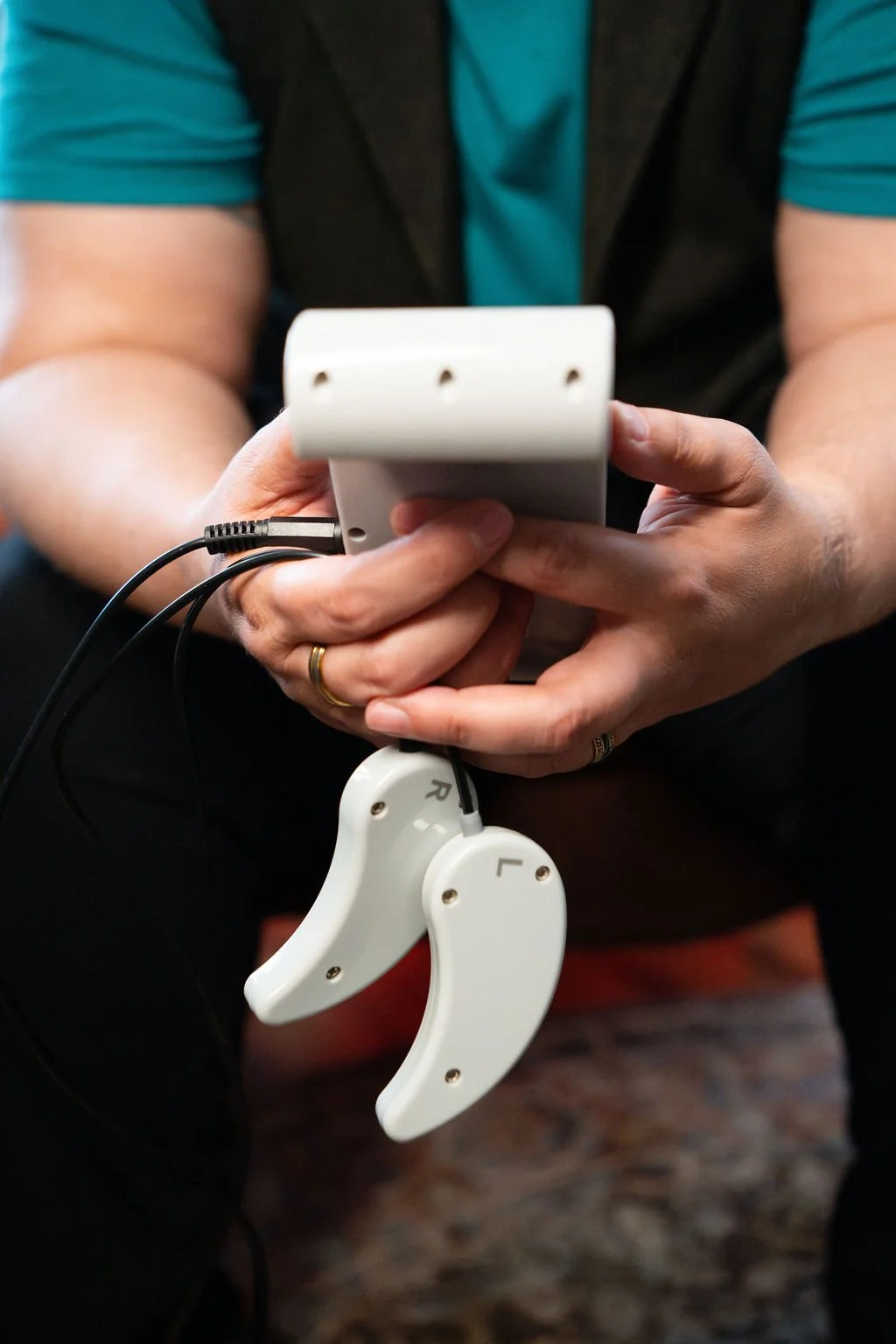
EMDR helps finish that job. During a session, your therapist activates the distressing memory while guiding you through bilateral stimulation, which is just a rhythmic, alternating sensory input applied to both sides of your body. In person, that usually looks like following your therapist's finger with your eyes or using a light bar. Online, it might be audio tones in headphones, small vibrating devices called "tappers," or tapping techniques you do yourself.
The bilateral stimulation helps reduce the intensity of the memory while keeping it accessible, so your brain can reprocess it and weave it into the rest of your life story instead of keeping it frozen in time. After successful EMDR reprocessing, most people say the memory is still there, but it doesn't hit the same way anymore. The emotional charge fades. The physical stress response quiets down.
The 8 Phases of EMDR Therapy
EMDR isn't a single technique you try once. It's a full therapeutic protocol with eight structured phases. Knowing what's coming can make the whole process feel a lot less scary.
Phase 1: History-Taking and Treatment Planning
Your therapist gets to know you. They'll ask about your history, identify the specific memories and current triggers that are causing distress, and build a treatment plan that's tailored to your experiences and your goals. This is also where you start building trust with your therapist, which matters a lot in this work.
Phase 2: Preparation
Before you go anywhere near the hard stuff, you and your therapist build a toolkit together. Grounding techniques. Safe-place imagery. Resourcing exercises. These are skills you can reach for between sessions and during any moment of distress that comes up later. Think of it as making sure you have everything you need before you start the climb.
Phase 3: Assessment
Together, you identify the specific memory you're going to work on. You'll name the negative belief you hold about yourself in relation to that memory ("I'm not safe," "I'm powerless," "It was my fault"), the positive belief you'd rather hold, and the emotions and body sensations that come up when you think about it. Your therapist also takes a distress rating so you both have a baseline.
Phase 4: Desensitization
This is the part most people think of when they hear "EMDR." You hold the target memory in mind while your therapist guides you through bilateral stimulation in short sets, with check-ins between each one. The goal is to bring your distress rating down toward zero. It can feel intense, and it can also feel surprisingly fast.
Phase 5: Installation
Remember that positive belief from Phase 3? This is where it takes root. Your therapist helps strengthen that belief and connect it to the memory network where the old, painful narrative used to live.
Phase 6: Body Scan
Your body keeps the score (as the saying goes). In this phase, you scan from head to toe for any lingering tension, pain, or discomfort tied to the memory. Anything that shows up becomes the target for a little more processing.
Phase 7: Closure
Every session ends with your therapist making sure you're grounded and emotionally settled before you walk away. You'll use the stabilization tools from Phase 2. Nobody sends you out the door still activated.
Phase 8: Reevaluation
At the start of your next session, your therapist checks in. How are you feeling since last time? Did the gains hold? Is there something that still needs attention? This is how the work stays responsive to you, not just a protocol on autopilot.
A full course of EMDR usually means processing more than one memory. How many sessions that takes depends on you: single-incident trauma (like an accident or an assault) might resolve in 3 to 12 sessions, while complex or developmental trauma typically takes longer because there are more interconnected memory networks involved.
What Conditions Can EMDR Help With?
EMDR was originally built for PTSD, and that's still where the evidence is strongest. But over the years, therapists and researchers have found that it helps with a lot more than that. If a distressing memory or a deeply held negative belief is at the root of what you're struggling with, EMDR can probably reach it.
- Post-Traumatic Stress Disorder (PTSD), the most thoroughly researched application, endorsed by the APA, WHO, and the VA
- Complex PTSD (C-PTSD) and developmental trauma from adverse childhood experiences
- Anxiety disorders including generalized anxiety, panic disorder, social anxiety, and specific phobias
- Depression, especially when it's connected to a trauma history or a specific triggering event
- Grief and loss, including complicated grief and traumatic bereavement
- Minority stress and internalized oppression, including the cumulative impact of racism, homophobia, transphobia, and other systemic forces on your mental health
- Performance anxiety in sports, public speaking, professional settings, and creative work
- Deeply held negative self-beliefs like worthlessness, shame, or inadequacy rooted in past experiences
At Liberation Counseling and Consulting, EMDR is one tool our therapist uses alongside other approaches like DBT skills and Internal Family Systems (IFS). We'll spend time figuring out your individual needs before jumping into EMDR, because EMDR works best as part of a broader therapeutic relationship, not as the only thing.

Wondering If EMDR Could Help You?
We offer a free consultation to talk it through. No pressure, no clinical jargon, just an honest conversation about whether EMDR makes sense for what you're going through.
Schedule a Free ConsultationWhat Are the Downsides of EMDR Therapy?
We're not going to sugarcoat this part. EMDR is powerful, and it works, but you deserve an honest picture of what the process actually looks like.
You might feel more before you feel better. Because EMDR actively stirs up stored memories, it's common to experience heightened emotions, vivid dreams, or intrusive thoughts in the days after a processing session. This is a normal part of reprocessing, not a sign that things are getting worse. Phase 2 exists specifically so you have tools to handle these moments when they come.
Complex trauma takes time. For a single-incident trauma, EMDR can work faster than traditional talk therapy. But if you're carrying years of developmental or relational trauma, the process will take longer. There are more memory networks to untangle, more stabilization work to do, and more layers to move through. That's okay. The timeline should honor your history, not rush past it.
Online delivery isn't ideal for everyone. Virtual EMDR is effective and increasingly well-supported by research, and we offer it across Arizona. But some folx, particularly those with dissociative symptoms or severe dysregulation, may do better with in-person sessions where the therapist is physically present. We offer both options at Liberation Counseling and Consulting, and we'll help you figure out which format makes the most sense for you.
Not everyone starts processing right away. Some people need more time in the preparation phase before diving into trauma work. If your therapist slows things down, it's because they're making sure the foundation is solid first. Rushing the process before you're stabilized can temporarily make things harder, and a good EMDR therapist won't let that happen.
Who Should Not Do EMDR (or Needs Special Consideration)?
EMDR is safe and effective for a lot of people, but it's not a one-size-fits-all situation. There are some circumstances where it needs to be modified, delayed, or preceded by other work first:
- Active dissociative disorders. Folx living with Dissociative Identity Disorder or experiencing severe dissociation need a modified EMDR approach with a heavy emphasis on stabilization and close clinical support. It's not a "no." It's a "yes, but carefully."
- Current crisis states. If you're in acute suicidal crisis, active psychosis, or an ongoing domestic violence situation, stabilization and safety planning come first. Trauma processing can begin once you're in a more stable place.
- Active substance dependence. Processing traumatic memories while in active addiction can destabilize recovery. Most clinicians want to see some degree of stabilization and sobriety before EMDR begins.
- Unstable medical conditions. Certain neurological or cardiac conditions may require medical clearance before bilateral stimulation is used.
If you're unsure whether EMDR is right for your situation, that's exactly what the consultation is for. Your therapist can evaluate where you are and recommend the right path forward. Please don't try to figure this out alone.
Can EMDR Trigger Dissociation?
This question comes up a lot, and we want to give you a straight answer: yes, it can. EMDR can activate dissociative responses, especially if you have a history of severe or early childhood trauma. That's a real thing, and it makes sense to be concerned about it.
But here's what matters: that risk is not a reason to avoid EMDR. It's a reason to make sure your therapist is trained to recognize and manage dissociation when it happens. A skilled EMDR therapist will screen for dissociative symptoms during your intake, spend extra time in Phase 2 building your stabilization toolkit, use modified processing techniques that limit the intensity of exposure, and know exactly how to bring you back to the room if you start to drift.
If dissociation is something you're worried about, say so in your consultation. Directly. A good therapist won't flinch at the question. They'll walk you through exactly how they handle it, because they've thought about it too.
What to Expect From EMDR Therapy at Liberation Counseling and Consulting
We offer EMDR both in person at our Tucson offices and online across Arizona, so you can choose the format that feels right for you.
Regular EMDR sessions are 60 minutes. Processing sessions may sometimes run longer than a standard appointment so there's enough time to complete a full reprocessing cycle and get you grounded before you leave. We also offer therapy intensives, which are extended sessions (usually around 3 hours) held less often. Intensives can be a great fit for folx who have greater time commitments in their daily lives and want more flexible scheduling.
For bilateral stimulation, your therapist will guide you through whichever method works best for the setting: guided eye movements using their hand or a light bar in person, or audio tones through headphones and self-tapping techniques for online sessions. It sounds different from format to format, but it works. Many folx actually prefer the comfort and privacy of doing this work from their own space.
At Liberation Counseling and Consulting, EMDR is available to adults and teens. Our EMDR-trained therapist will spend real time getting to know you before jumping into any processing work, because the most important part of therapy is the relationship you build together.
Schedule a Free ConsultationFrequently Asked Questions About EMDR Therapy
What are the potential downsides or risks of EMDR therapy?
The biggest one is temporary emotional intensity between sessions. EMDR stirs up stored memories on purpose, so it's normal to feel more emotional, have vivid dreams, or notice intrusive thoughts popping up in the days after a session. These effects are short-term and expected. They're actually a sign the reprocessing is working. Phase 2 of EMDR gives you specific tools to manage these moments, and your therapist will pace the work so you're never in over your head.
What is dissociation during EMDR, and is it dangerous?
Dissociation is a temporary disconnection from your thoughts, feelings, or surroundings. Think "spacing out," but more intense. It can happen during EMDR, especially for folx with a history of severe or early childhood trauma. That's exactly why trained EMDR therapists screen for it early, build stabilization skills before processing starts, and know how to bring you back to the room if it happens. If this is a concern for you, bring it up in your consultation. Seriously. A good therapist will welcome the question.
Who should NOT do EMDR therapy? Are there contraindications?
EMDR may need to be modified or come after some stabilization work for folx experiencing active psychosis, certain dissociative disorders, acute suicidal crisis, or unstable substance use. These aren't hard "no"s. They're situations where the timing and approach need to be adjusted. If you're not sure whether EMDR is right for where you are right now, that's exactly what the consultation is for.
How long does EMDR therapy take to work?
Honestly? It depends. A single traumatic event, like a car accident or a specific assault, can often be processed in 6 to 12 sessions. Complex trauma, like years of adverse childhood experiences, takes longer because there are more interconnected memories to work through. EMDR isn't always the "quick fix" people hope for, but it's often faster than traditional talk therapy for the same issues. Your therapist will give you a realistic sense of timeline after getting to know your history.
Is EMDR therapy effective for anxiety and depression, or only PTSD?
EMDR has the strongest research behind it for PTSD, but it's increasingly used for anxiety disorders (generalized, panic, social, phobias), depression connected to trauma, grief, and even the cumulative effects of minority stress and systemic oppression. The APA and WHO officially recognize it for trauma, and clinical practice has expanded from there. If a distressing memory or a deep negative belief is driving your symptoms, EMDR can likely reach it.
Can EMDR therapy be done online, and is it as effective as in-person?
Yes, and yes. We offer both in-person EMDR at our Tucson offices and online sessions across Arizona. For virtual sessions, your therapist adapts bilateral stimulation using audio tones through headphones, guided eye movements on screen, or self-tapping techniques. Research increasingly supports the effectiveness of online EMDR, and many of our folx actually prefer doing this work from home. That said, if you're dealing with severe dissociation or acute dysregulation, starting in person may make more sense. We'll figure that out together in your consultation.
Do you take my insurance?
The short answer is "maybe." Some of our teammates can take insurance, and others can't. Get in touch with us and we'll sort it out. If we can't take your plan, we can provide all the paperwork you need to submit for out-of-network reimbursement.
What are your rates?
Because we're a collective, each of our teammates sets their own rates. Check out the Our Team page for details, or reach out to us directly to ask about EMDR session pricing.
How does online therapy work?
It's really simple! Before your first session, your therapist sends you a link to a secure video site. When it's time, you click the link and you're in. For EMDR sessions specifically, you may want headphones for bilateral stimulation audio tones. Your therapist will walk you through the whole setup before your first processing session. No tech wizardry required.
When You're Ready
How Do You Get Started?
The first step is a free consultation. It's just a conversation. Your therapist will ask about what's bringing you in, your history, any therapy you've tried before, and what you're hoping for. It's also your chance to ask whatever you need to ask: about their training, their approach, what a session actually looks like. No one's going to rush you.
If you decide to move forward, your first several sessions focus on getting to know each other and building your preparation toolkit. You won't be asked to dive into your hardest memories on day one. The process is paced. You set the pace.
If you're ready to explore EMDR therapy with a trained therapist in Tucson or online across Arizona, we'd love to hear from you.

About Liberation Counseling and Consulting
Therapy for Marginalized Folx
Liberation Counseling and Consulting is a Tucson, AZ therapy practice offering feminist, anti-racist, and anti-oppression counseling for marginalized folx. With locations in Civano, El Dorado, and Sierra Vista, their diverse team of therapists specializes in counseling for teens, 2SLGBTIA+ adults and teens, relationship counseling, and EMDR therapy, creating a space where clients never have to leave any part of themselves at the door.
This content is intended for educational purposes and does not constitute medical or psychological advice. If you are in crisis, please contact the 988 Suicide and Crisis Lifeline by calling or texting 988.